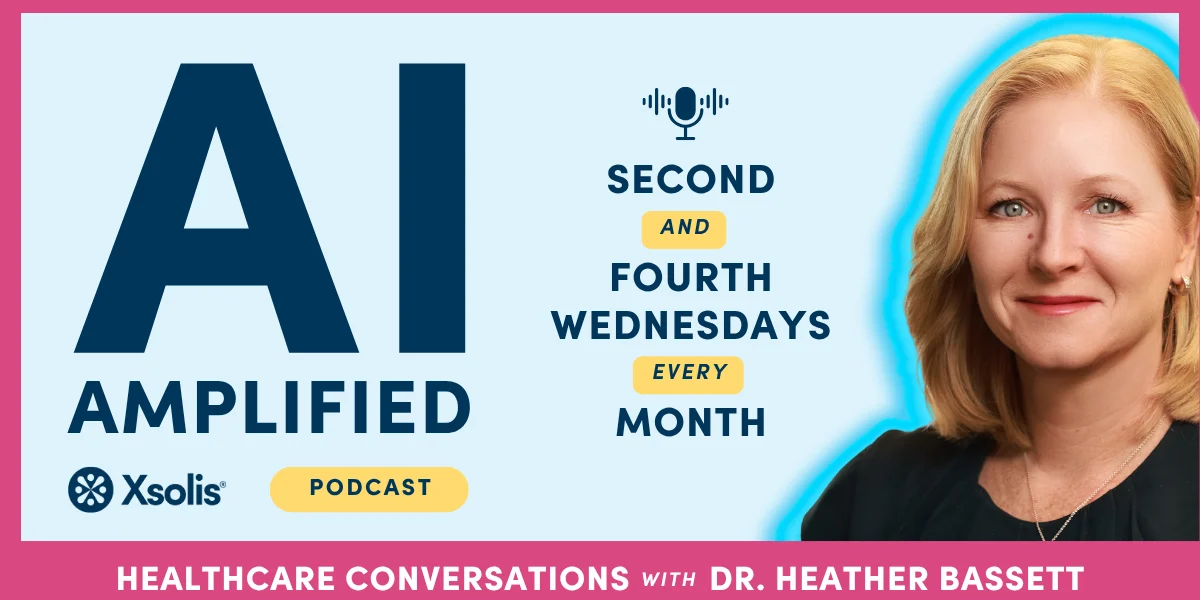
Season 1: Episode 12
The Operational AI Opportunity Hospitals Are Missing
with guest Rom Eizenberg, CRO and Head of Product Innovation, Kontakt.io
From Computer Science to Care Delivery
Host of AI Amplified, Dr. Heather Bassett, interviewed Rom Eizenberg, Chief Revenue Officer and Head of Product Innovation at Kontakt.io. The conversation opened with Rom’s unconventional path into healthcare — a background spanning computer science and international economics, shaped by a longstanding interest in bridging technology with human needs. After six years at Kontakt.io, Rom described how healthcare’s sheer scale and universal relevance drew him in: it touches every person, drives a significant share of the economy, and remains stubbornly resistant to the operational improvements that have transformed other industries.
The Investment Gap Nobody Talks About
Rom and Heather quickly zeroed in on a blind spot in healthcare AI investment. Clinical technologies — physician-facing tools, diagnostic systems, EMR infrastructure — have attracted enormous attention and funding. But the operational layer that actually delivers care has been largely overlooked. Heather drew a direct parallel to her own experience at Xsolis, where challenges like patient transportation and utilization review were perennial afterthoughts despite their outsized impact on efficiency and outcomes. A recent Kontakt.io white paper examines five operational domains where the gap between current performance and what’s achievable is both measurable and fixable: asset and supply chain management, staff safety, staff productivity, patient flow and the patient journey, and infection prevention. The opportunity is hiding in plain sight.
Building AI-First and Building Lean
At the core of what Kontakt.io does is a deceptively simple idea: hospitals have demand (patients who need care) and supply (staff, equipment, space) — and the two are rarely well-matched in real time. Traditional coordination relies on human-driven processes that are slow, inconsistent, and difficult to scale. Rom explained how Kontakt.io uses AI to bridge that gap, enabling data-driven resource allocation and decision-making that responds to what’s actually happening across a facility at any given moment.
Why RTLS Changes the Data Equation
A key enabler of that capability is real-time location systems (RTLS), which generate millions of timely, machine-generated records tracking the movement of people and equipment throughout a hospital. When layered with EMR data, that stream of information enables something new: the ability to predict patient paths and prepare for clinical needs before they arise. Rom offered a concrete example — knowing in advance that a syringe pump should be staged in the cardio ICU before a patient arrives, rather than scrambling to locate one after a clinical decision has already been made. It’s a shift from reactive coordination to predictive workflow management.
Agentic AI That Rewrites the Playbook
Heather raised a concern that resonates across healthcare AI conversations: what happens when AI simply automates broken workflows rather than improving them? Rom offered that Kontakt.io’s agentic AI system starts by attempting to apply standardized workflows to a given situation. When something falls outside the norm — and in a hospital, that happens constantly — the system escalates to an AI agent capable of reasoning through the irregularity and rewriting the workflow in real time. The goal isn’t to replicate what humans do. It’s to handle the routine so that humans can focus on what only they can do.
The Excel Analogy That Reframes the Workforce Conversation
No conversation about agentic AI goes long without arriving at the question of jobs. Rom shared an exchange from a candidate interview that reframed it in a way worth remembering: when Microsoft Excel automated the routine work of accountants, it didn’t shrink the accounting profession — it grew it, because individual accountants became dramatically more productive and valuable. The same logic applies here. AI that handles coordination, logistics, and workflow management doesn’t replace clinical expertise. It creates the conditions for that expertise to be applied where it matters most.
Robots, Reality, and the Irreplaceable Human
The episode closed with a look at what’s already underway in hospitals — robotic pilots and automated delivery systems are more widespread than most people realize. Rom was careful to draw a clear line: automation can move supplies, but it cannot replace the human relationships at the center of patient care. That boundary isn’t a limitation of the technology. It’s a feature of what healthcare fundamentally is.
Rom Eizenberg on LinkedIn
Kontakt.io on LinkedIn
Kontakt.io website
The Operational Gap: A Report on Where Hospitals Are Losing Value | Kontakt.io Care Operations Intelligence Brief | 2026
About the Host and Guest
Host
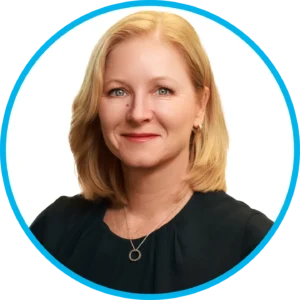
Heather Bassett, MD
Chief Medical Officer
Xsolis
Dr. Heather Bassett continues to drive AI innovation in healthcare to address operational challenges for health systems and plans, guiding them toward positive operational and patient outcomes. Rare among Chief Medical Officers at healthcare technology companies, she leads both the clinical services and data science teams. She architected Xsolis’ Care Level Score™, which integrates clinical expertise and data science to provide a numerical representation of the appropriate care status for each patient. This score and Xsolis’ AI-driven platform, Dragonfly, are uniting payers and providers during concurrent authorization processes to improve utilization management, patient outcomes, and reduce costs. Dragonfly is in use at hundreds of hospitals, health systems and health plans across America.
Dr. Bassett is passionate about advancing responsible AI in healthcare and is actively leading Xsolis’ involvement with the Coalition for Health AI (CHAI), an organization advancing the responsible development, deployment, and oversight of AI in healthcare, which Xsolis joined as an Early Member. Dr. Bassett was recognized by Nashville Business Journal’s Health Care Innovation Awards as Chief Medical Officer of the Year 2021 and by Becker’s Hospital Review’s Women in Health IT to Know 2023-2026. She has contributed articles or been featured in Newsweek, Forbes, AARP Magazine, InformationWeek, Becker’s, Fierce Healthcare, Medical Economics, MedCity News, Physicians Practice, and Patient Safety Quality Healthcare.
She earned a B.S. in biological sciences from Carnegie Mellon University and her Doctor of Medicine from the University of Texas Medical Branch, Galveston, Texas, where she worked as a research associate in the field of DNA repair. She undertook her residency in internal medicine at Vanderbilt University Medical Center and worked as a hospitalist at Centennial Medical Center in Nashville, Tenn., for eight years. She is board-certified in internal medicine.
Guest
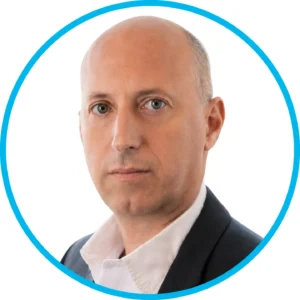
Rom Eizenberg,
CRO & Head of Product Innovation
Kontakt.io
Rom Eizenberg is the Chief Revenue Officer and Head of Product Innovation at Kontakt.io, where he leads efforts to transform healthcare operations through an intelligent orchestration platform. With over two decades in enterprise software, digital transformation, and startup leadership, Rom has held key roles at Hewlett Packard, HID Global, and Bluvision–HID, and is a founder of two technology ventures. Educated in computer science and international economics, and holder of three patents, Rom is passionate about designing innovative, human-centered solutions that improve patient outcomes, staff productivity, and hospital efficiency.
More on the Topic

 Chief Healthcare Executive
3 Reasons for Hospital Executives to Leverage Technology for Operational Improvements
Blog

AI in Healthcare Administration Is Boosting Efficiency Fast
TL;DR: Artificial intelligence is rapidly transforming healthcare administration by reducing paperwork, automating manual workflows, and improving collaboration between providers and payers. The result is greater efficiency, less burnout, and more […] Blog

3 Benefits of AI in the Operations of Healthcare
The future of AI in healthcare is a bright one. It’s already proven its value in diagnosing and treating disease, as well as supporting more efficient administrative functions. Artificial intelligence […]About AI Amplified with Heather Bassett
AI is here. It’s real. And it’s making major impact. If it seems like artificial intelligence is everywhere, you’re not wrong. Physician and data scientist Dr. Heather Bassett, Chief Medical Officer at Xsolis, is at the forefront of innovation and she cuts through the noise as she speaks with industry leaders who are making a real impact in the world of healthcare AI. AI Amplified focuses on the amazing innovations in AI, challenges the industry is facing, lessons learned, and how to ensure future success to bring back the joy in medicine.
Brought to you by:
AI Amplified is brought to you by Xsolis, an AI-driven healthcare technology company transforming the payer-provider dynamic and uniting these two crucial stakeholders like never before. Since 2013, Xsolis has been breaking down silos to eliminate friction, waste, and unnecessary manual work in healthcare.
Join us in solving some of the biggest challenges in healthcare. Request a consultation to learn more about Xsolis.
Let's Chat