Season 1: Episode 7
AI in Medical Education: Training the Next Generation
with guest Ronald Rodriguez, MD, PhD, professor of medical education and program director for the MD/MS in Artificial Intelligence dual degree at Joe R. and Teresa Lozano Long School of Medicine at The University of Texas at San Antonio
AI and Medicine Career Evolution
Ronald Rodriguez, MD, PhD, is professor of medical education and program director for the MD/MS in Artificial Intelligence dual degree at the Joe R. and Teresa Lozano Long School of Medicine at The University of Texas at San Antonio (UT San Antonio). During this episode, Dr. Rodriguez discusses with Dr. Bassett his career journey, highlighting his early interest in AI during his undergraduate studies at MIT and his subsequent focus on medical research and surgery. After experiencing a life-changing kidney transplant, Dr. Rodriguez shifted his focus to AI and bioinformatics, leading to the development of a dual-degree program in artificial intelligence at UT Health San Antonio. He and his colleagues worked on creating a curriculum for the program, which was initially rejected by the Regents but was later approved after being rewritten to allow for a memorandum of understanding between the two institutions.
MD-AI Dual Degree Program Development
Ron and Heather discussed the development of a dual-degree program in MD and AI at UT San Antonio, which aims to prepare future physicians to lead in the AI-driven healthcare space. Ron explained that while they initially focused on biomedical sciences applications like protein folding and gene regulation, they adapted to include generative AI and LLMs as these technologies became more prominent. The program’s curriculum now encompasses both traditional AI applications in healthcare and emerging technologies like large language models, reflecting the rapidly evolving landscape of medical AI.
AI in Healthcare: Challenges and Training
Ron and Heather discussed the rapid evolution of AI in healthcare and its implications for training future leaders. They explored how AI can both support and complicate clinical workflows, with Ron emphasizing the need for thoughtful integration to avoid unintended consequences. They also discussed the economic challenges of AI implementation in healthcare, including how costs can be passed on to patients. The conversation touched on the importance of teaching students about AI’s limitations and potential biases, as well as the legal and regulatory considerations surrounding its use.
Long School of Medicine – Rodriguez, Ronald M.D., Ph.D.
Mays Cancer Center at UT Health San Antonio – Ronald Rodriguez M.D. | UT Health San Antonio MD Anderson Cancer Center
About the Host and Guest
Host
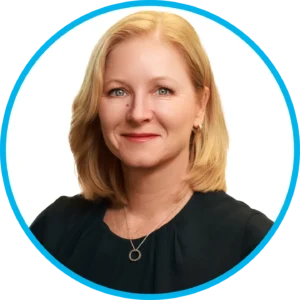
Heather Bassett, MD
Chief Medical Officer
Xsolis
Dr. Heather Bassett continues to drive AI innovation in healthcare to address operational challenges for health systems and plans, guiding them toward positive operational and patient outcomes. Rare among Chief Medical Officers at healthcare technology companies, she leads both the clinical services and data science teams. She architected Xsolis’ Care Level Score™, which integrates clinical expertise and data science to provide a numerical representation of the appropriate care status for each patient. This score and Xsolis’ AI-driven platform, Dragonfly, are uniting payers and providers during concurrent authorization processes to improve utilization management, patient outcomes, and reduce costs. Dragonfly is in use at hundreds of hospitals, health systems and health plans across America.
Dr. Bassett is passionate about advancing responsible AI in healthcare and is actively leading Xsolis’ involvement with the Coalition for Health AI (CHAI), an organization advancing the responsible development, deployment, and oversight of AI in healthcare, which Xsolis joined as an Early Member. Dr. Bassett was recognized by Nashville Business Journal’s Health Care Innovation Awards as Chief Medical Officer of the Year 2021 and by Becker’s Hospital Review’s Women in Health IT to Know 2023-2025. She has contributed articles or been featured in Newsweek, Forbes, AARP Magazine, InformationWeek, Becker’s, Fierce Healthcare, Medical Economics, MedCity News, Physicians Practice, and Patient Safety Quality Healthcare.
She earned a B.S. in biological sciences from Carnegie Mellon University and her Doctor of Medicine from the University of Texas Medical Branch, Galveston, Texas, where she worked as a research associate in the field of DNA repair. She undertook her residency in internal medicine at Vanderbilt University Medical Center and worked as a hospitalist at Centennial Medical Center in Nashville, Tenn., for eight years. She is board-certified in internal medicine.
Guest
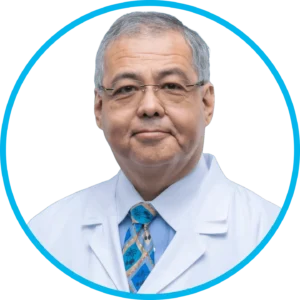
Ronald Rodriguez, MD, PhD
Professor of Medical Education and Program Director for the MD/MS in Artificial Intelligence dual degree at Joe R. and Teresa Lozano Long School of Medicine at The University of Texas at San Antonio
Ronald Rodriguez, MD, PhD, is a professor of medical education and program director for the MD/MS in Artificial Intelligence dual degree – the nation’s first dual degree of this kind – at the Joe R. and Teresa Lozano Long School of Medicine at The University of Texas at San Antonio.
Dr. Rodriguez is a world expert in the use of cryoablative technologies for kidney and recurrent prostate cancer and performs both open and laparoscopic surgery. He conducts basic research in a variety of urologic conditions and his research group is internationally recognized in the development of adenoviral gene therapy for urologic malignancies. He continues to oversee a basic research group and has a clinical practice focused on urologic cancer.
Dr. Rodriguez received his bachelor of science degree in life sciences from the Massachusetts Institute of Technology in 1984. He obtained his doctorate in cell biology from Baylor College of Medicine in 1990, and his medical degree from Baylor College of Medicine in 1992 as part of the Medical Scientist Training Program. After medical school, Dr. Rodriguez entered Johns Hopkins University School of Medicine in 1992, and completed his residency and fellowship training in 1998. He subsequently stayed on faculty at Johns Hopkins from 1999-2012. During his last seven years at Johns Hopkins, he was the program director for urology training. In January 2013, he left Johns Hopkins to become the Henry B. and Edna Smith Dielmann Memorial Professor of Urologic Science and the Chairman of the Department of Urology.
More on the Topic


Why Responsible AI in Healthcare Is Critical for Trust
Responsible AI is essential for building trust and ensuring that AI in healthcare administration enhances rather than undermines patient care. This blog explains how ethical, transparent, and accountable AI practices […] Blog

How AI in the Healthcare Industry Is Changing Patient Care
AI in the healthcare industry is no longer theoretical. It’s actively reshaping patient care by improving accuracy, reducing delays, and enhancing decision-making. This blog explores how AI tools are improving […] Blog

The Types of AI in Healthcare and How They Can All Help Your Staff
Summary: This blog explores the types of AI in healthcare and how they help staff improve efficiency, reduce burnout, and enhance patient care. Rule-based systems for clinical decision support Machine […]About AI Amplified with Heather Bassett
AI is here. It’s real. And it’s making major impact. If it seems like artificial intelligence is everywhere, you’re not wrong. Physician and data scientist Dr. Heather Bassett, Chief Medical Officer at Xsolis, is at the forefront of innovation and she cuts through the noise as she speaks with industry leaders who are making a real impact in the world of healthcare AI. AI Amplified focuses on the amazing innovations in AI, challenges the industry is facing, lessons learned, and how to ensure future success to bring back the joy in medicine.
Brought to you by:
AI Amplified is brought to you by Xsolis, an AI-driven healthcare technology company transforming the payer-provider dynamic and uniting these two crucial stakeholders like never before. Since 2013, Xsolis has been breaking down silos to eliminate friction, waste, and unnecessary manual work in healthcare.
Join us in solving some of the biggest challenges in healthcare. Request a consultation to learn more about Xsolis.
Let's Chat